A musty smell after snowmelt
Basements that smell earthy in March and April often have water seeping through a foundation crack or window well.
Denver mold remediation since 2011
We trace and fix the leak before we remove a single spore, then back every treated area with a 5-year no-regrowth warranty.
1Mold basics
Mold spores are in every home, in every city. They only grow where something stays damp for more than a day or two. In a dry place like Denver, visible mold almost always means water is getting in somewhere.
2Signs
None of these mean you have a mold problem for sure. Two or more in the same room is a good reason for a free moisture check.
Basements that smell earthy in March and April often have water seeping through a foundation crack or window well.
Brown or gray rings on ceilings and lower drywall that get a little bigger each month point to a slow, steady leak.
Common around tubs, showers and swamp cooler vents, where steam or cooler air keeps a wall damp.
Heavy condensation on cold windows every morning soaks sills and the drywall below them.
If a baseboard flexes when you press it, the wall behind it has likely been wet for a while.
The pipe got fixed, but nobody dried the wall cavity. This is the single most common cause we find.
4Our process
Most mold jobs take two to four days. You get a written scope and price before any work starts.
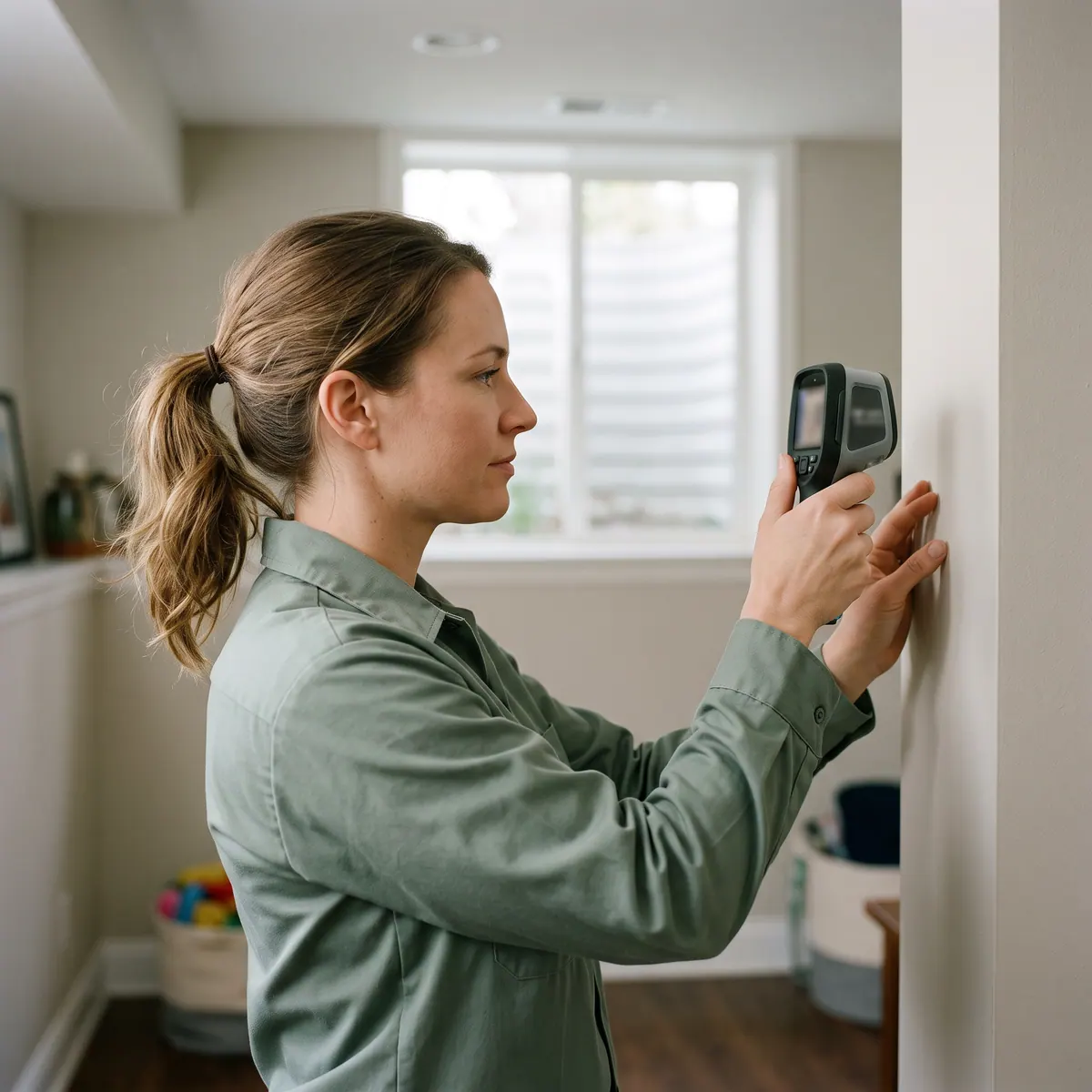
We scan walls, floors and ceilings with meters and a thermal camera to find every wet spot.
You keep the moisture mapLeak, seepage or condensation, we stop it first, or line up the right trade if it is a roof or foundation.
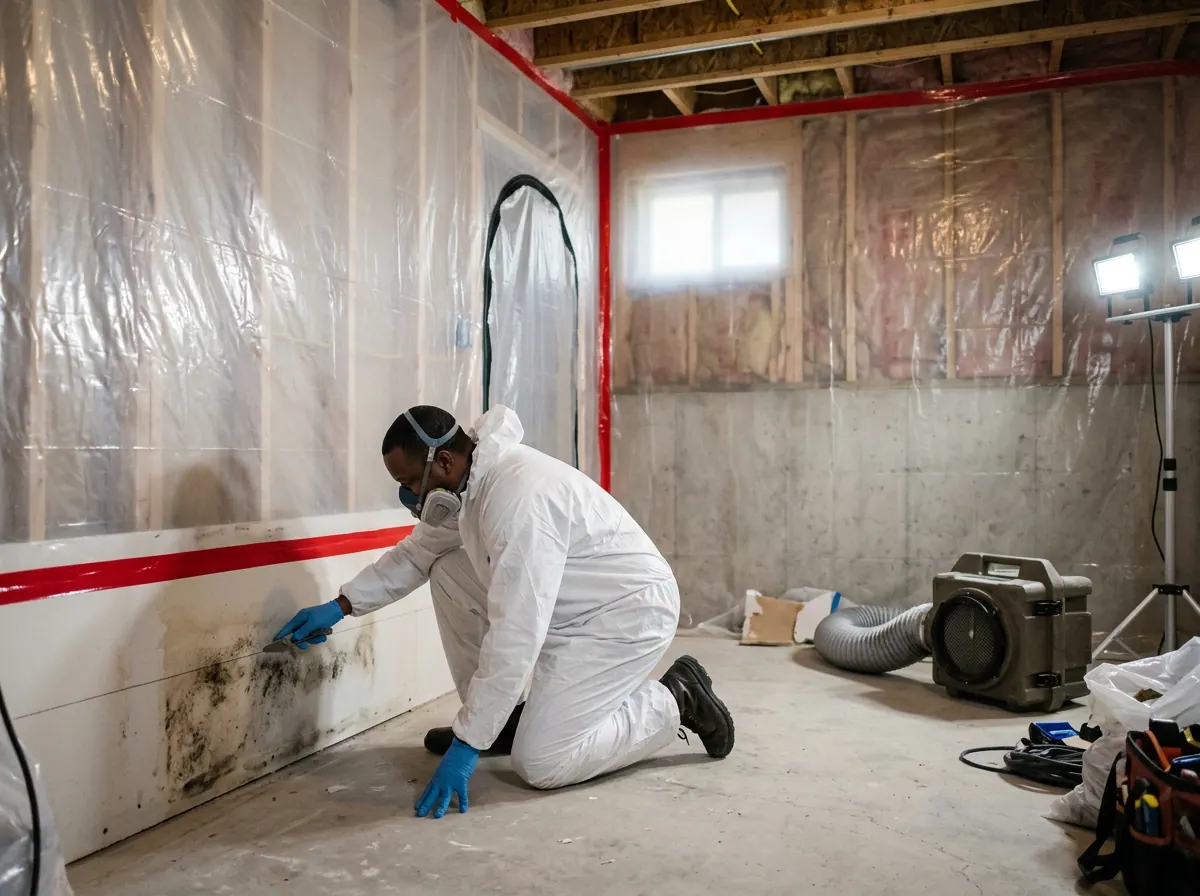
No source, no regrowthPlastic containment and filtered negative air keep spores from drifting into the rest of the house.
Rest of home stays usableMoldy drywall and insulation come out. Framing is cleaned, dried and treated. Every surface is filter-vacuumed.
Photo log of each stepWe re-scan the area and show you the readings before the walls close and the warranty starts.
5-year warranty beginsIf mold grows back in an area we treated within five years, we remediate it again at no charge. Transferable if you sell the house.
5DIY or call
We would rather you save the money on a small spot. Here is the honest line.
Wear gloves and a mask, scrub with soap and water, dry it fully, and watch the spot for a month.
The moisture check is free. One in three ends with "you are fine" and a tip.
6Prices
Typical ranges from our jobs last year, including containment, removal and drying. Your written price comes after the free check.
Reviews
"Two companies quoted us mold removal. Aldana was the only one who asked where the water came from. It was a window well. Fixed that first, and it has been dry for three years."
"The free check found our attic bath fan was venting into the insulation. Total job was $3,100 and they showed me the thermal photos before and after."
"I expected a sales pitch. Instead they told me the spot under my sink was small enough to clean myself and showed me how. Guess who I called when the basement flooded."
Questions
Still unsure? Call any hour. A trained technician answers and will tell you plainly whether it can wait.
Usually not. If we can see mold and find the moisture, testing adds cost without changing the plan. We recommend lab testing when you smell mold but no one can find it, or when a buyer or landlord asks for it.
In most cases, yes. The work area is sealed off with plastic and filtered air, so the rest of the house stays in normal use.
Mold from a sudden, covered leak often is. Mold from long-term seepage or humidity usually is not. We work with every insurance carrier and document the source for your claim.
Most jobs take two to four days, plus drying time if the source was recent. Your written scope lists the days before we start.
Any regrowth in an area we treated, as long as the moisture source we fixed stays fixed. We come back, find out why and remediate again at no charge.
No. Denver air is dry most of the year. We only suggest one for a basement that reads damp after the source is fixed, and we show you the reading.
We are here to help
Call and describe it, or text a photo after the call. We will tell you if it is a weekend DIY job or worth a free moisture check.